Wednesday, February 1, 2012

Miami Marathon

Along with 25,000 other people, I ran the Miami Marathon last Sunday. Actually, I ran the half marathon part of the race, as usual.

This was the fifth time for me for this race.  It's got to be one of the most beautiful race courses in the country.


This is a photo of the start of the race. It begins at the American Airlines Pavilion (on left in photo) where the Miami Heat plays their games.  I won't go in the building to see a game anymore because a certain former Cleveland Cavalier plays there now.

Then it goes over to Miami Beach via the MacArthur Causeway.  At this point the sun is not up yet.  The bridge has purple lights shining across the water.  To the south you can see the cruise ships docked at the port.


Once you get to the beach the sun has started to rise.  As you run north it's easy to see some of the clubs are still open and going strong.  There are a lot of spectators along the course cheering.


After eight miles, the course goes back across the water on the Venetian Causeway.  This part of the course is made up of roads through very exclusive residential areas built on small islands joined by bridges. Below is a photo of an aid station on the Venetian Causeway during this year's race.  It's a big job helping the runners to stay hydrated!


Once back in Miami proper, the course goes through a rather sketchy section of Miami before veering off from the marathon course to finish in a park just south of the basketball arena.  By now, if it's sunny, the usual heat and humidity begin to take their toll.  It's a good time to finish.

This year I took a little longer to finish - 1:39:45 or about 7:37 per mile.  My best for this course is 1:35:57. 

Since I'm a very competitive person, I thought about what might have slowed me down this year.

Besides being a year older, I missed a good couple weeks of training in December battling a nasty sinus infection, so perhaps I wasn't quite in tip top shape.

Also, it was hard to avoid indulging in holiday eating and drinking.  Being 5 pounds lighter might have helped.

Maybe the biggest factor was the start, though.  I think there were about 8,000 more runners compared to last year.  The corrals were jam packed with people.  It took me seven minutes just to get to the starting line after the start.  It took a couple of miles for the crowd around me to thin out enough for me to safely run my race pace.

I love running this race and will do it again if we're down there at the right time next January!

Tuesday, January 31, 2012

Coffee and Dining in Miami

We just got back from the first week of our 2012 Miami Residency.  Actually, we are now calling our time there "Cleveland Orchestra Miami", complete with Art Deco logo.
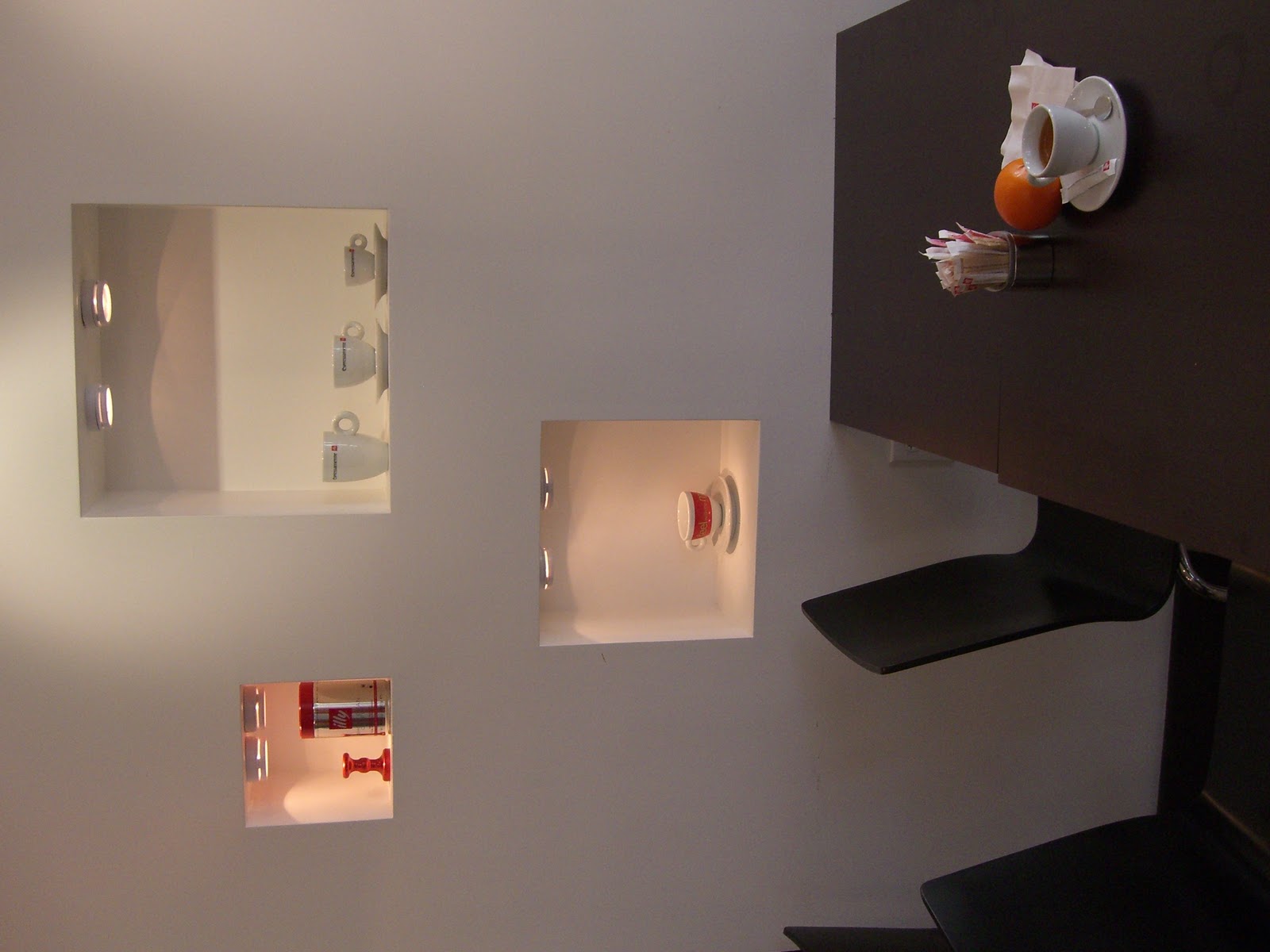
Although we were quite busy there, I did have some time to seek out more coffee places. My favorite remains Espressamente, the Illy espresso bar in the lobby of the Bayshore Marriott where the orchestra stays.


The bar has a sleek, modern design that highlights the coffee machines and accessories.


One night I had a tasty dinner at David's, a Cuban restaurant on Meridian Road just north of Lincoln Road in South Beach.  It is one of the few good, affordable restaurants in the area.  Below is a photo of my pollo asado, black beans and rice and fried plantains.


Afterwards I had a cup of Cuban coffee. It is made using an espresso machine, but there the similarity ends. The coffee usually has little or no crema on the top and is made very sweet.  Not sure if it's cane sugar, but there is a wonderful, syrupy sweetness that is balanced by the strong roast of the coffee. 


Later that week I found an interesting Italian coffee bar called Pinocchio.  It's on 8th St. in South Beach just off of Ocean Drive.  The bar is filled with things related to the story of Pinocchio.


The espresso there was just OK, but maybe I'll try again when it's not so busy. 

Another great place for coffee is the Nespresso store and coffee bar on Lincoln Road. It's on Lincoln just east of Alton Road.  The store is beautifully designed with the boxes of coffee pods and the pods themselves used in the design.  You can order coffee made from one of a dozen or so types, ogle the fancy machines and even buy one there if you want.  Nespresso has a mail order coffee service that's nice, too.

Here I am at the bar.


We also had a Bassoon Dinner in the middle of the week.  Jonathan Sherwin, John Clouser and Hugh Michie (who is subbing on second bassoon) joined me at Cafe Nuvo in the Spanish Village neighborhood for skirt steak.

Wednesday, January 25, 2012

Second Bassoon Audition

We held an audition for second bassoon last Sunday.  From around 200 applicants, the field was screened by resume -- in some cases, by recording-- to 46 invited candidates.  From that number, 37 attended our audition.

The audition was held on the stage of Severance Hall.  The candidates played from a position in the middle of the stage, approximately where the second bassoonist would sit in the orchestra.  The audition committee sat in the hall on the orchestra ground floor.  A series of room dividers was put in front of us as a screen to provide anonymity in the first round.

All applicants in the first round played the exposition of the first movement of the Mozart Concerto, the first four lines of page 2 from the Overture to the Marriage of Figaro, the solo from the second movement of Tchaikovsky's Symphony #4 and, in some cases, the second bassoon part from the opening of the second movement of the Brahms Violin Concerto.

We chose six candidates from the first round to hear again in another round.  Excerpts asked for that round were:

Mendelssohn Symphony #3, second movement tutti passage just before letter F
Tannhauser Overture opening
Ravel Piano Concerto in G, 3rd movement, 2nd bassoon part only
Bach B minor Mass, Quoniam
Verdi Overture to "I Vespri Siciliani" opening three passages

After hearing all six play and following brief discussion, the committee and Franz Welser-Most decided that we had heard no one who was sufficiently qualified that day for our second bassoon position.

Results like these are frustrating for all involved -- auditionees, committee members, music director and personnel managers.  I'd like to devote the rest of this blog to sharing my thoughts as to why the day was not successful.

In spite of the result, I think our audition system works pretty well. Not only do we try to give applicants the opportunity to prove their worthiness, we try very hard to be discriminating during the audition process.  It is much more difficult and painful to deny tenure to someone who, after being hired, demonstrates deficiencies during a season or two of performing.  Better to do the weeding carefully from the beginning, if possible -- at the audition.  If that means not hiring anyone, so be it.

First of all, we don't usually invite that many people to play live, so we're not trying to filter through a couple of hundred players over several days.  We usually try to conduct our business in a single day's time.

Second, those that are not invited based on their resume are given the opportunity to submit a recording of their playing for evaluation and possible invitation.  This is not just a bone thrown to those younger, less experienced players we may not want to hear.  Indeed, four of our most recent hires started their audition process at this stage and were only invited after the committee had heard them.

Regarding the second bassoon audition, we invited only one person from the group of recordings to the live audition.

Third, because we limit the number of live auditions, it is usually possible for Franz Welser-Most to hear all candidates in every round of an audition.  This is very unusual -- maybe unique among major orchestras.  Having him in from the beginning lends more focus and discipline to the listening we do.

So what happened Sunday? 

I would summarize the lack of success in two ways:

1. A great majority of the candidates did not seem to have good control, pitch or evenness of tone in the low register.  This is extremely important for any second bassoonist and was signally lacking in most of the playing we heard. 

None of the second round candidates displayed mastery of the soft dynamic, secure articulation and solid intonation in the Tannhauser excerpt, in particular.  This one and the Brahms Violin Concerto from the first round were the "money" excerpts for me.

In addition, there were a number of players who exhibited a rough, percussive style in the Mozart Concerto.  Accenting every downbeat, emphasizing bar lines, and using explosive articulation in a piece that has a nobility and grace made the bassoonists on the committee embarrassed at times for the way our instrument was being treated.

2. Most of the candidates did not "play the hall".  While it's generally not possible to play in the audition space prior the event, players can usually try a few notes to check acoustics.  It's smart to make small adjustments in approach based upon what you hear coming back to you after checking some notes.  I usually play a few detached notes to hear the reverb time and then go.  Choose your best notes!  This is not a time to check things about which you are not sure!

Be aware that when playing technical passages, if the committee is sitting out in the hall or is placed far away from you, it may be necessary to take a click or two off of your tempo so what you play will be clearly heard.  Severance Hall has world-class acoustics. The stage is very sensitive and projects the sound into the seats with ease.  There is no need to strain or over play to put your sound out there.

So many Figaros and Ravel piano concertos we heard just sounded like a blur.

Nerves, a lack of awareness of the acoustics and an inability to gauge how the performance is heard in the seats made many candidates rush through technical passages.

There is another factor to consider:  a majority of most audition committees is made up of non-bassoonists.  They will be listening with different ears.  Many will be more concerned with a general impression, instead of focusing on the specifics of bassoon playing.  A surprising number will be rather unfamiliar with some of the repertoire you're playing -- especially second bassoon parts.

Those auditioning need to keep this under consideration.


I hope what I've had to say here will shed some light on how things played out last Sunday and help any of those we might hear for this position in the future.

At this point, it's unclear how we're going to proceed to fill the position.  Another audition needs to be scheduled.  I can't speculate on how we will go forward at this time.

Monday, January 16, 2012

Inspiration

Today, I'd like to share some recent listening and watching I've done on YouTube with you.


First is a performance of Schumann's song, "Mondnacht" (Moonlit Night) by German baritone, Dietrich Fischer-Dieskau.

Fischer-Dieskau was one of the great singers of the 20th century and the most-recorded baritone in history. He was a master at interpreting the German Lied (song).  Coupled with a fanatical dedication to the poetry of the text, he possessed a ravishingly pure and focused voice that he could manipulate to bring out the meaning of the lines he was singing.

In "Mondnacht", you'll hear his beautiful, long-breathed legato and gentle phrase endings. If you need something to relax you after a hectic day, just listen to this.  You don't even need to know German to get the mood.

There are several versions of him singing this song.  I like this older one with pianist Gunther Weissenborn. Fischer-Dieskau's voice sounds more fresh and pure in this one.

http://www.youtube.com/watch?v=kBGyJvHe0kc

There is another one with Christoph Eschenbach that is just as good, and perhaps offers a more nuanced interpretation.  This one also has a very clever, minimalist graphic to it.  German readers will notice that it takes the lines of the poem and creates a new poem by the end.

http://www.youtube.com/watch?v=34oBTWLxcso&feature=endscreen&NR=1


Vladimir Horowitz

Horowitz was known for giving larger than life performances of the big Romantic concertos and other works for piano.  Here he takes a very simple piece, Schumann's Arabesque and interprets it with great subtlety.

The piece is structured in six sections -- an "A" section that returns twice, interspersed with two contrasting episodes and finishes with a short coda. 

Notice what Horowitz does with the "A" sections!  The first time the theme is presented very clearly and simply.  When the "A" section returns, he adds nuance with more ebb and flow to the tempo.  His playing here exhibits a graceful and tasteful use of rubato. You may want to keep time with your foot or finger to see how and when he bends the tempo.

When the "A" section returns for the final time, it sounds distant, like a reminiscence.  It sounds like a romantic memory from the past.

http://www.youtube.com/watch?v=fYDSiFh1uiA&feature=related

Now for some non-musical inspiration!


Since today we observe Dr. Martin Luther King, Jr.'s birthday today, I thought I'd include a link to one of his most inspirational writings, the "Letter from a Birmingham Jail".

http://www.africa.upenn.edu/Articles_Gen/Letter_Birmingham.html

Monday, January 9, 2012

A new shaper!


I have enjoyed using my new shaper, made for me by Paul Deegan of MD Reed Products.  He has expertly copied my old Berdon #6 fold over shaper, making its design in the form of a straight shaper.

This copy is much more exact than the one made earlier for me by the Fox Products Corporation.  The design of this shaper has a little wider throat compared to most other bassoon reed shapes.  This helps mitigate a slight narrowness in sound I notice with my 7000 series Heckel.  I think it helps broaden the sound and even the scale on most bassoons as well.

The flair from throat to tip is moderate.  A large increase in width from throat to tip would (assuming an already-wide throat) make the reed unwieldy and unstable.

There is a decent amount of back flair (the reverse flair from the narrowest point near where the second wire goes to the butt), meaning that a good amount of beveling is helpful for proper tip opening contour.

Cane fits in this shaper with the bark side facing up.  This is opposite from the Fox shapers, so those used to a Fox will have to flip the cane.  It's not easy to see which way the bed is contoured (concave or convex) so it's possible to crack the cane when screwing the shaper parts together if the cane is loaded upside down.

The shaper mates with the MD Profiler by indentations made in the gouged side of the cane near both ends.  The indentations are made by two sharp ferrules set in bottom side of the shaper.  When the two sides are screwed together the indentations are made.  These indentations help the reed maker center the cane on the cane barrel of the profiler for profiling. You can see the identical ferrules on the cane barrel in the photo below.


The shaper is easy to use, however, I noticed that it scratches easily under the knife.  I contacted Paul about this and he will hard anodize the surface of the metal in future batches for greater durability, making them scratch-proof.

Straight vs. fold over shapers

Bassoon reed shapers are made in two different ways:  straight and fold over.


Above is a photo of a Rieger fold over shaper.  The cane is first profiled and folded in half.  Then it is slipped over the metal tongue on the left in the middle.  One side on top, one on bottom of the tongue.  The desired shape of the reed is machined into the tongue.  The two arms are rotated over the cane and clamped down.  The excess cane that hangs over the sides of the tongue is cut away.  This is how the design of the tongue is copied onto a piece of cane.

Here is a photo of a straight shaper, showing the widest point (A), most narrow (B) and butt (C) of the design.  With a straight shaper, you start without profiling, using a gouged piece of cane. I have described how to load the shaper above. The overlapping cane is cut away, much in the same way as it is with a fold over shaper.

I have used a fold over shaper for years and am quite used to it. However, I must say the straight shaper is MUCH easier to use.  Since the cane is unprofiled, you don't have to deal with the very thin, delicate cane near the fold that is normal with a fold over shaper.  Unlike using a fold over shaper, there is no chance the cane is going to slip around the shaper while using it and virtually no chance you will ruin the cane with a slip of the knife and the cane won't come apart at the fold.  All of these are hazards with a fold over shaper.

Here are some tips on how to shape with a fold over shaper.  Scroll down to the "after profiling" section and read steps 3-5.  There is a short video of me shaping (snore!!)

Knife work is easier and somewhat safer with a straight shaper, too.

So why use a fold over shaper?  To begin with, many bassoonists shaped cane by hand, without use of a shaper.  When this technology became available, prominent teachers had machinists design shapers with the dimensions of these shapes in mind.

With a fold over shaper, the taper only needs to be duplicated once (right side and left side must be symmetrical), so that was the easier route for the machinist.  This was the predominate method of shaper manufacture for years.  Indeed, it is much easier to copy a fold over shape and manufacture it than it is to convert a fold over shape into a straight shape.

Conversion requires not only precise copying of the shape, but also must account for any contouring of the shaper surface from left to right.  Some makers leave this area perfectly flat, others contour to match the curvature of a piece of cane.  Any copy needs to take this into consideration.

Also, in making a straight shaper, the tapers of the shape must be reproduced three times (top right, top left, bottom right, bottom left). 

However, with computer programming, this can now be done easily.

A very thorough discussion of the two types of shapers is found on the Herzberg Projects website.  Take note: Herzberg uses the term "flat" when referring to a straight shaper.

Friday, January 6, 2012

A new profiler!


Happy New Year!  

This post marks the first anniversary of this blog.  I hope you readers have found it useful, revealing and entertaining.  I have enjoyed doing it.  I look forward to the next year of posts and have several topics ready for investigation.

I will devote this post to news about a new profiler made by Paul Deegan of MD Reed Products. My students and I have recently purchased these tools. 

The profiler is remarkable for two reasons: price and quality.

Price

The profiler sells for $599, making it one of the least expensive on the market.  MD also made a straight shaper for me that is a copy of the Berdon #6 that I regularly use.  More about the shaper in my next post.

Many college bassoon students have access to profilers owned by their schools or teachers while enrolled.  After graduation, in addition to paying off considerable debt, they often find themselves without access to a profiler.  While not as sophisticated, this profiler is much more affordable than the VanHoesen Hunt, Rieger, Herzberg profilers, for instance.

There are other profilers available at this price point, but this one is the best I've found for the money.

Quality

A wealth of information on the manufacture and adjustment of the profiler can be found at MD Reed Products

Perhaps the most unique feature of the profiler is the way you adjust the thickness of the cut.  This is done by rotating one or both of the adjustment wheels found at both ends under the ramp that the cutting arm wheel follows.

One wheel adjusts for the reed tip area, the other for the back of the blade. The wheels are rotated manually, without the need to loosen and re-tighten set screws or without the need to remove posts to shim.  However, the wheels lock in place and cannot be moved by accident. Thus, it is quick and easy to adjust the profile on this machine.

Other profilers I've tried at this price point do not offer some of the options that this one does:

Customized ramp design

I sent Paul Deegan a list of my ideal measurements for the spine of a profiled reed blade and he designed a ramp to my specifications.  While not exact, it came in very close to what I wanted.  We are now working on some refinements. I have not encountered another dealer who is this interested in getting thing so exactly right for a machine at this price.


Spine or no spine option

The tungsten carbide rods protruding from the cane barrel have a machined flat spot that makes a very slight spine on the profiled blank, giving a start to the thin sides/thick center "horizontal" profile necessary for a finished reed.  This can be removed simply by rotating the rod or ordering without the flat spot.

Scoring on the cane barrel


The cane barrel is scored at the midpoint for scoring the fold and at both ends for proper centering.  This can be done for cane of varying lengths.  Mine is scored for 120mm cane.

In the photo above you may notice what looks like two set screws set into the metal just before the end score marks.  These make indentations to the gouged sides of the cane that mate with identically placed screws in the shaper. If you shape first, the marks are made when setting the cane in the shaper and screwing it shut.  After shaping, the cane can be easily centered on the profiler's cane barrel (photo above) because the cane locks in place when indentations are set in over the screws in the barrel.

This is especially important if you use an eccentric gouge and put a spine in the profile.  With these indentations and screws, it's very easy to line up the cane on the barrel and get a symmetrical profile in relation to the gouge.

The way these tools are mated is similar to the Herzberg profiler and shaper.


The blade 

The profiler comes with a carbide blade and a spare.  MD Reed Products offers a sharpening service with postage paid by the company.  My blade is very sharp and cuts beautifully.  It is set to cut a thickness of .005" at a time.  

Product review time out

I'd like to take a short time out from this review to talk about how to profile effectively using any machine.  No, profiling is not dummy-proof!  Here are some tips:
  • Use very little downward pressure on the cutting arm when profiling.  Excess pressure may rip the cane and can compress the cane fibers. If the blade doesn't cut well using this method, then it needs sharpening.
  • Do not be in a hurry!  Flip the barrel several times and take your time finishing.  Don't finish one side all at once.  Again, haste can result in ripped cane and an inaccurate profile
  • Watch for cane fibers in the forks, in the blade clearance or on the ramp.  Get these out of the way before starting the cut or you won't get the profile you want.
  • Profile in one direction.  Don't return the cutting arm with the blade contacting the cane. This can dull the blade and "iron" the cane.  Instead, return the cutting arm with the blade slightly raised above the cane.  Make a very flat oval shape with your wrist instead of a simple left-right motion.
  • If you notice the cane becoming so thin that it is transparent and you can clearly see the barrel through the cane, STOP!! The profiler may be out of adjustment and by stopping now, you will avoid scraping the barrel with the blade.
  • When finished profiling you can score the collars and center marks by holding a knife point to the surface of the cane and rotating the barrel with your free hand.
Back to profiler review

Here is a demonstration of the MD profiler.

In short, I am very impressed with the quality and options available with this profiler for the price.  There are other profilers more sophisticated with more options, but this is the best one out there dollar-for-dollar.

Though it offers just a very simple spine and none of the tip detail of a Herzberg or VanHoesen profiler, it is extremely well-made, durable and reliable. I have my reasons for not owning one of these fancier profilers.  I'll discuss them in a future post.

I use this profiler in conjunction with a straight shaper that MD copied from my old Berdon #6 and a Rieger tip finisher.  This gives me what I need in a good reed blank.

My next post will investigate the shaper.

Thursday, December 15, 2011

Winter weather and the bassoon

It's winter in our area now, so my thoughts have turned to building a fire in our fireplace, enjoying the glow of the Christmas tree and holiday activities.

However, now that the heat is on in our buildings and cars, it's also necessary to deal with the dryness caused by the heat and what it does to reeds and bassoons.

I use a small humidifier in my bassoon case, wetting it each day to impart some moisture to the bassoon.  This helps prolong the life of the instrument, keeps pads resilient and wood from contracting or even cracking.

Other remedies include adding orange peel to the inside of the case every few days and using a string dampit. The dampit should never be put inside the long joint as it may cause mold to grow in the bore there.

Reeds also require special care in the winter.

Some time ago I hosted William Waterhouse for recitals and master classes at Interlochen and Michigan State University.  It was January during his tour and I remember him noticing that reeds would dry out in his mouth while playing.  Being British, he was not used to this experience due to the humid air brought to the British Isles by the Gulf Stream!

Indeed, there are times in the winter where I have found it necessary to stop during a performance or practice session to re-soak my reed.  The dryness closes the tip and inhibits free vibration in the blades.

Humidifying your reeds while at rest is helpful.  I use a special reed case with a hygrometer and a small piece of wet sponge in an air-tight chamber to keep the reeds humidified.

A more simple solution is to put the reed box in a plastic bag with a small hole cut in it and add some orange peel to it, putting fresh peel in every couple of days.

With all of these methods, it's important not to overdue the humidity and watch for mold!